Spain Disappoints as Gabon Embraces the Nuclear Weapons Ban Treaty

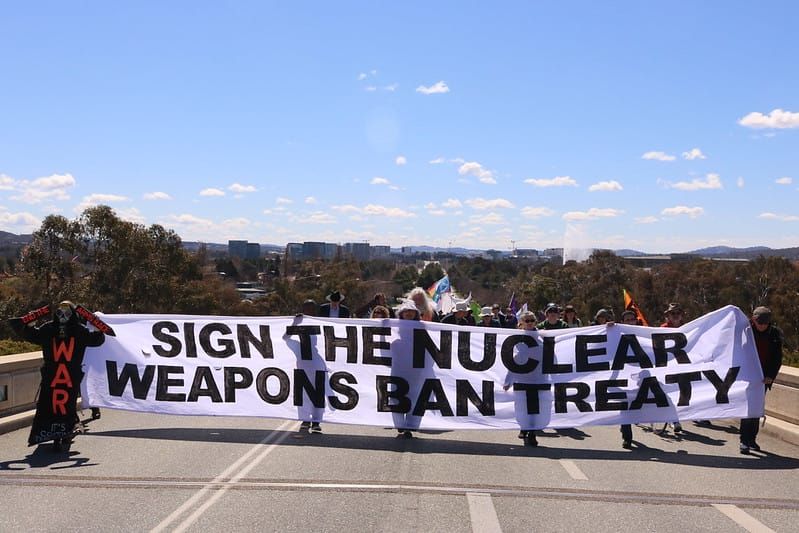
On July 7, 2017, the unthinkable happened. The Treaty on the Prohibition of Nuclear Weapons (TPNW) was passed at the United Nations. Four years later, on January 22, 2021, the nuclear weapons ban treaty, as it is commonly known, entered into force. For survivors of the atomic bombings of Hiroshima and Nagasaki, organizers at the International Campaign to Abolish Nuclear Weapons (ICAN), and the millions around the world, who since 1945 have worked tirelessly to eliminate nuclear weapons, the ban treaty was the culmination of decades of research, diplomacy, education, and advocacy.
Since its inception, the TPNW has been led and championed by African, Asian, and Latin American nations. This should not be surprising. People of color around the world have routinely been the victims of uranium mining, nuclear testing, and the use of nuclear weapons and as such, have often been on the front lines in the efforts to eliminate nuclear weapons. Latin America became a nuclear weapon free zone (NWFZ) in 1967 with the Treaty of Tlatelolco. The South Pacific did the same in 1986 with the Treaty of Rarotonga. The Treaty of Bangkok in 1997 made Southeast Asia nuclear weapons free and the same can be said for the continent of Africa when the Treaty of Pelindaba entered into force in 2009. The Central Asian Nuclear-Weapon-Free Zone Treaty also entered into force in the same year.
The West’s attitude towards the Global South’s support for nuclear disarmament, and the TPNW specifically, has often come with a heavy dose of condescension, dismissiveness, and general superiority. The consensus among many Western nations has been that the TPNW lacks legitimacy because no nuclear powers have joined. In short, the Global South’s voice and opinions on the nuclear issue do not matter. This behavior is similar to how the Global South was treated during the early years of the Cold War when the West clung to colonialism as independence movements proliferated, especially throughout Africa, and with the rise of the non-aligned movement.
Last week those who support the TPNW were hoping for some good news coming out of Spain as it appeared that it would be the first NATO country to join the TPNW. There has been little doubt as to where the population and Spain’s prime minister stand on the issue. Results from a poll taken in May 2026 revealed that 80% of Spaniards were in favor of joining the TPNW. Prime Minister Pedro Sánchez has argued that nuclear deterrence does not equal a guarantee of security but "a roulette." In 2018, Sánchez publicly committed to signing the TPNW. According to ICAN, “The Spanish public is among the most anti-nuclear in Europe.” Indeed, “132 Spanish cities and municipalities have now signed the ICAN Cities Appeal, formally urging the national government to join the TPNW. Mayors and local councilors from across the political spectrum, many from the Prime Minister's own Socialist party, have signed. The demand for joining the TPNW is deeply rooted in local communities across the country,” ICAN stated.
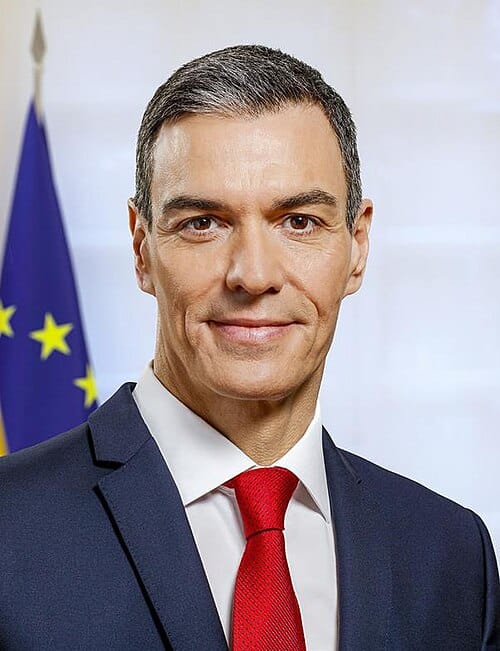
Regardless of all the support, the vote to join was rejected. To be clear, the vote did not decide whether Spain would join the treaty. It would, however, have called for the government to start that process. While the result is a missed opportunity, ICAN has made clear that this defeat does not close the door to Spain joining the TPNW. “The decision to pursue accession remains with the Spanish government, and the public support, civil society mobilization. In a few months, states parties, diplomats, official observers, scholars, and organizers will attend the first Review Conference for the Treaty on the Prohibition of Nuclear Weapons. This will be a time to reflect, negotiate, push, support, and make our collective voice heard on a world stage that nuclear disarmament is the only way forward to a world of peace and security. It also offers Spain another opportunity to engage with the treaty.”
As Spain’s leadership failed to demonstrate the moral courage to join the TPNW, Africa once again stepped up when Gabon signed the Treaty on September 23. As to why Gabon supports the TPNW, Gabonese foreign minister, Marie-Édith Tassyla-Ye-Doumbeneny, said: "My country is firmly committed to these principles and wishes to reaffirm its commitment, and contribute to their implementation alongside all partners for a safer world."
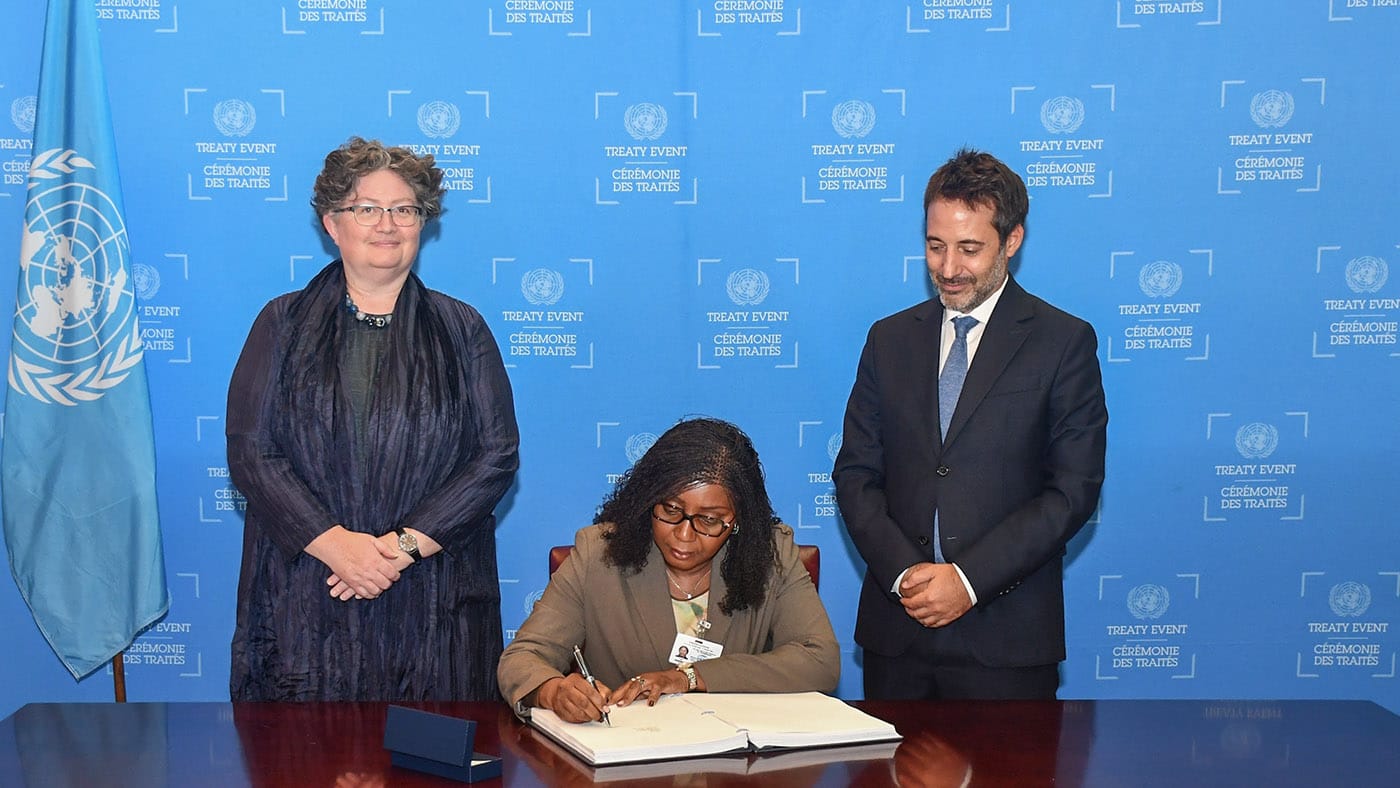

Left: Gabonese foreign minister, Marie-Édith Tassyla-Ye-Doumbeneny, signs the treaty at the United Nations in New York. Right: ICAN's Melissa Parke and Seth Shelden with Marie-Édith Tassyla-Ye-Doumbeneny. Photo Source: ICAN
Seth Sheldon of ICAN once explained how he viewed the TPNW and nuclear disarmament. “It's like building a house,” he said. “The NPT may be the foundation or the cornerstone and the TPNW is the capstone. We have a lot of floors to build in between, but we will get there.” With Gabon joining the TPNW, we collectively climb another step towards building the house that is nuclear disarmament. Your move Spain.