From Hiroshima to Diplomacy: How Learning about the Bomb Changed My Path
In our new series featuring the voices of a new generation, Martyna Szoja describes her path to working for peace.

In 2024, I made my first trip to Hiroshima and Nagasaki as part of the United Nations Office for Disarmament Affairs’ Youth Leader Fund for a World without Nuclear Weapons (YLF). Little did I know this program and trip would have such a profound effect on my life.
The most important part of the trip for me was meeting atomic bomb survivors (hibakusha), particularly Ms. Keiko Ogura. During one of our meetings, a YLF participant asked her: “Do you hate Americans?” Ms. Ogura responded: “You cannot build anything on hate.” It might sound simple, but hearing these words from Ms. Ogura, in the place where the first atomic bomb was dropped, was deeply moving. I could feel myself beginning to change, and her message has stayed with me ever since.
I have been fortunate to return to Hiroshima twice, including as a visiting researcher at the Hiroshima Peace Institute. I spent almost three months experiencing the city, walking, reflecting, revisiting historical sites, and engaging more deeply with hibakusha and the city’s peace institutions. Only then did I begin to truly understand Hiroshima, not simply as a site of tragedy, but as a city of peace.
What particularly stayed with me was that many hibakusha refuse to be reduced to victims. Their message of “No More Hiroshima, No More Nagasaki” is not about presenting Japan as a victim of the Second World War. It is a universal appeal for peace and for preventing the use of nuclear weapons anywhere again.
This became even clearer to me through a story told by my Chinese colleague, who once met a hibakusha. When the man learnt he was from China the hibakusha’s first words were: “I am sorry.” My colleague explained that this encounter showed him something profound: the hibakusha do not simply remember what happened to them. Many also seek to understand why the tragedy happened in the first place, including the broader history of the war.
I came to understand the hibakusha’s message as an important contribution to the global movement for peace. Like many young people, I want to contribute to something larger than myself. Their message gave me the motivation and inspiration to work for peace.
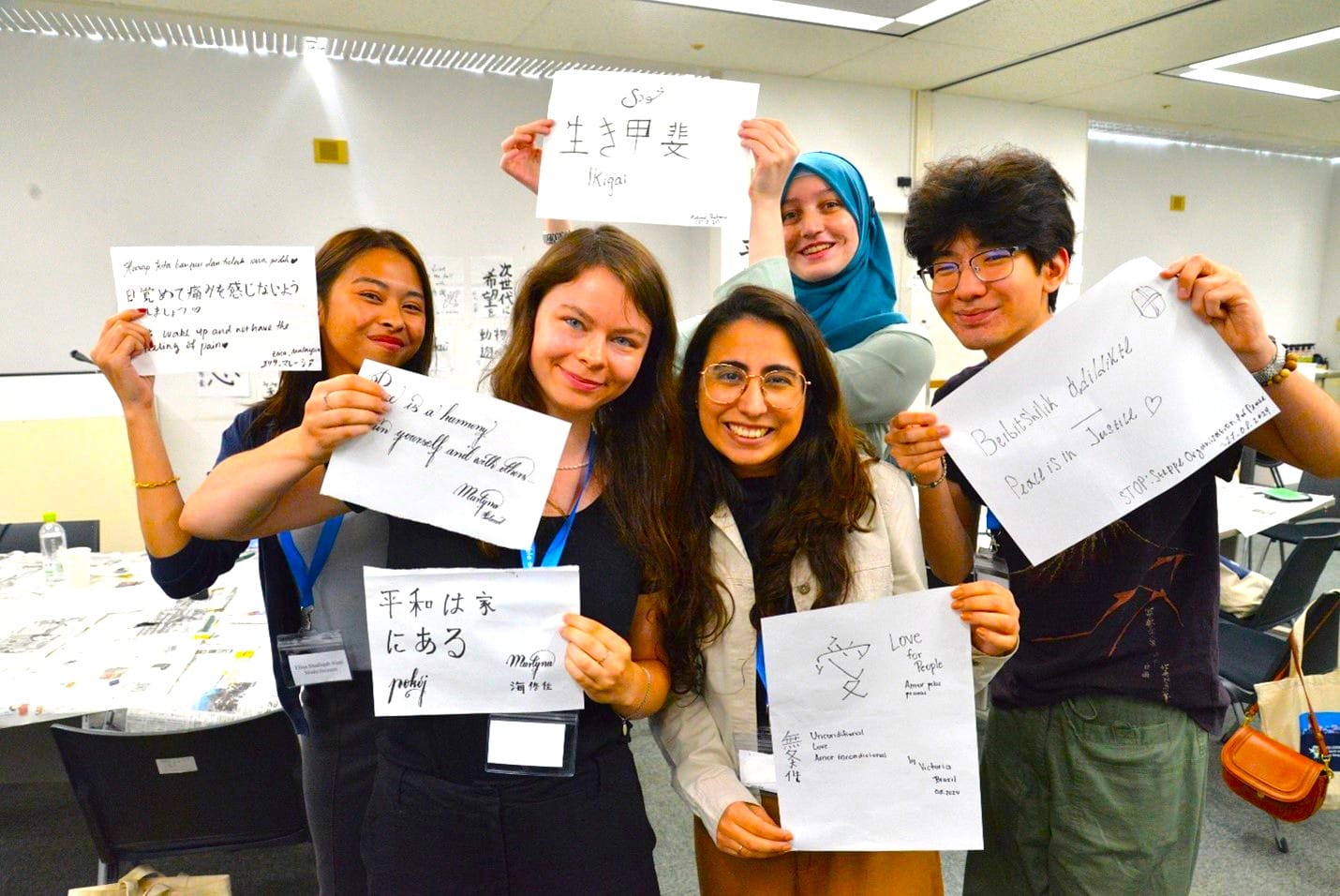

Left: Martyna learning traditional Japanese calligraphy/Right: Attending the Mayors for Peace Youth Summit
The YLF also changed my academic path. I feel genuinely fortunate that my research now focuses on weapons of mass destruction, nuclear non-proliferation and disarmament. Before joining the YLF, I had imagined researching cultural exchanges between Europe and Asia. The program introduced me to peacebuilding and nuclear non-proliferation and ultimately changed the direction of my professional life.
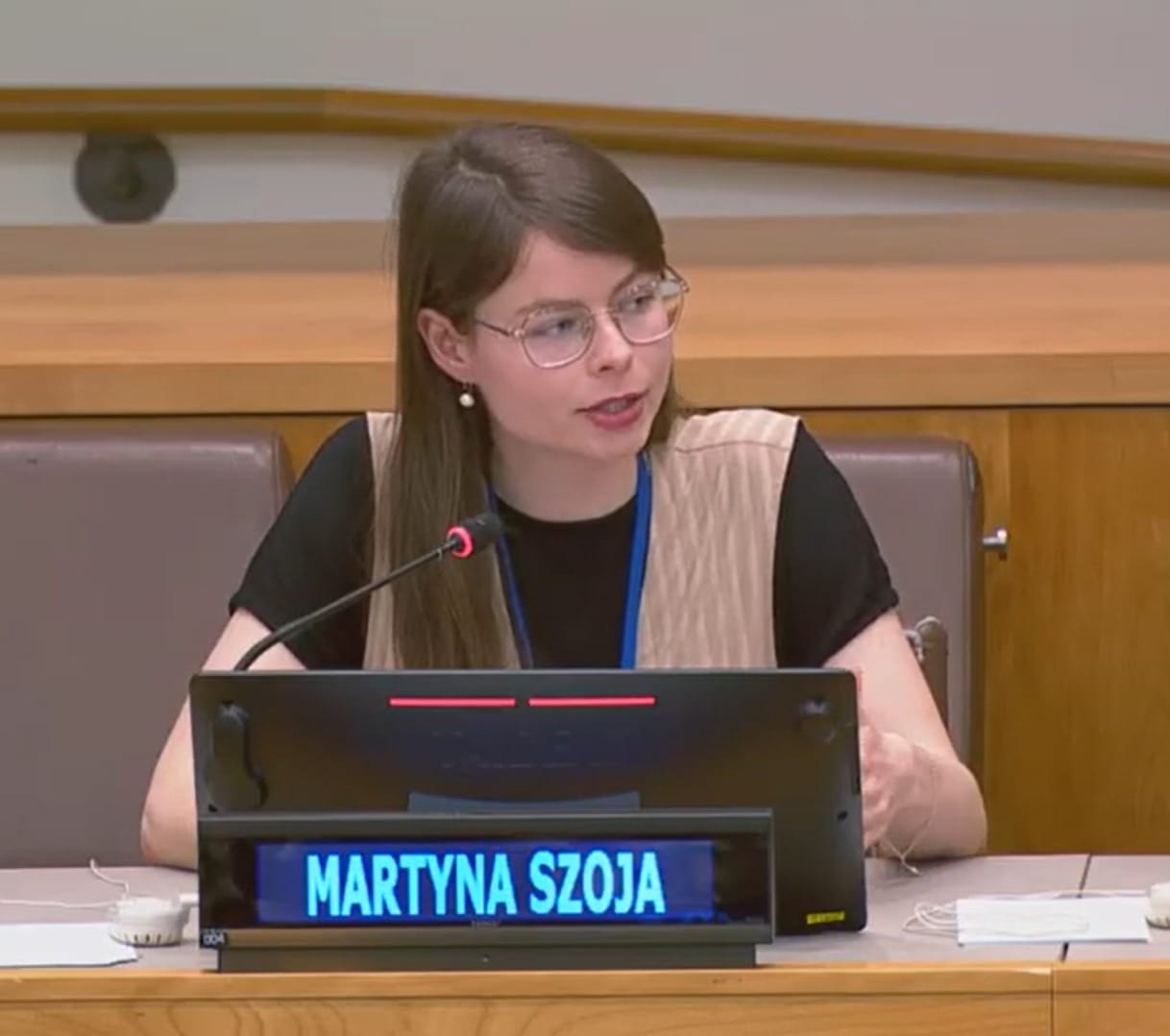
The YLF was also my introduction to the United Nations. In 2026, I participated as a member of a civil society delegation at the 11th Nuclear Non-Proliferation Treaty (NPT) Review Conference. This was another eye-opening experience. I met experts whose work I had previously known only through their publications, as well as diplomats directly involved in decision-making.
The NPT Review Conference was a bittersweet experience. “Sweet” as I experienced the processes I had studied for years. I spoke with experts whose work I previously knew only through and with diplomats directly involved in decision-making. However, I also saw how difficult it has become to achieve progress. I remember civil society participants queuing for seats in the balcony when the General Assembly hall had visibly empty spaces for delegations. For me, the staircase in the Vienna Café became a symbol of this division: civil society was literally “downstairs” while the decisions seemed to be happening literally above our heads.
Yet I remain hopeful. I look forward to the upcoming Review Conference of the Treaty on the Prohibition of Nuclear Weapons (TPNW), where I hope to see continued ambition and engagement that I follow in the TPNW environment.
I want my work to contribute to making the world safer. I will continue researching peace, arms control and non-proliferation in academia or a research institution. In the longer term, I would also like to establish a Peace Center in Poland, my home country, that will focus on arms control and non-proliferation. I want to create a space where research, policy and dialogue can come together.
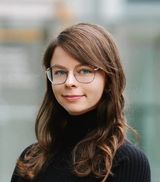
Martyna Szoja is Ph.D. candidate at the University of Duisburg-Essen, Germany and a member of the first cohort of the UNODA Youth Leader Fund.
This is the first in the Nuclear Times new series: “Voices of a New Generation for Disarmament”