Jesse Jackson: The Nuclear Disarmament Candidate
As we look back at Jesse Jackson’s life, it is important to remember he was part of a long line of African Americans who consistently made the case that race, colonialism, and nuclear weapons were inextricably linked.

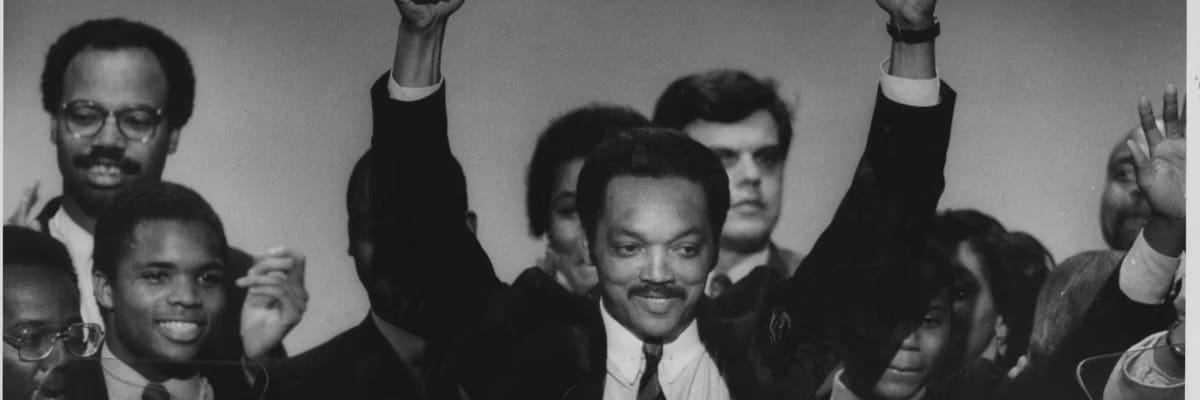
A week before the historic June 12, 1982 rally in Central Park in which one million people marched for an end to the nuclear arms race, a sister rally was held on the West Coast in Pasadena. Following a series of speeches and performances from LeVar Burton, Muhammad Ali, Stevie Wonder, Dolores Huerta and others, civil rights leader, Jesse Jackson walked on stage and addressed the ninety thousand people in attendance: “We shall march until there is no more war and no more weapons. The world faces a critical choice-to freeze weapons or burn the people. We’re not the only nation who ever made an atomic bomb, but we’re the only nation that ever dropped one. We must wake up and tell the world, we must have peace now.” He then implored the crowd to “choose life and a new president.”
Two years later, with President Reagan as their opponent, the Democrats fighting for the 1984 presidential nomination made sure to offer support for the nuclear freeze initiative. They had witnessed Reagan increase the military budget from $130 billion to nearly $300 billion, which in part went to funding the development of new nuclear weapons and delivery systems, including the B-1 and B-2 bomber, the MX missile, Trident missile submarines, and intermediate-range cruise missiles. In addition, Reagan, who opposed the 1963 Nuclear Partial Test Ban Treaty, the 1968 Nuclear Non-Proliferation Treaty, the 1972 SALT I agreement, the Anti-Ballistic Missile Treaty, the Peaceful Nuclear Explosions Treaty of 1976, and SALT II, cut $26 billion from domestic programs that benefitted the most vulnerable. While California senator Alan Cranston, former vice-president Walter Mondale, and Colorado senator Gary Hart all voiced their opposition to Reagan’s policies, it was another Democratic candidate who articulated the strongest antinuclear position.
When Jesse Jackson ran for president in 1984, he dedicated a substantial portion of his campaign to the nuclear arms race. Stating, “We will choose the human race over the nuclear race," Jackson’s platform included a pledge from the United States to never again be the first to use nuclear weapons, as well as a 20 percent cut in the military budget and a six-month moratorium on the production, testing, and deployment of all nuclear weapons. Jackson called for the withdrawal of the Pershing II and Cruise missiles from Europe and establishing nuclear-free zones worldwide. He favored continued adherence to the 1967 Outer Space Treaty and the Anti-Ballistic Missile Treaty; ratification of SALT II, the Threshold Test Ban Treaty, the Peaceful Nuclear Explosion Treaty, the Comprehensive Test Ban Treaty, and the creation of a crisis control center with the Soviet Union and other world powers to reduce tensions and avert accidental disasters.
For many, Jackson was the only candidate to effectively link peace with social justice, which they defined as “the lynchpin of a genuine and lasting peace.” The National Campaign for No-First-Use of Nuclear Weapons maintained that Jackson’s representatives were among the strongest advocates of a no-first-use policy. Supporters hoped Jacksons’ candidacy would bring in thousands of newly elected officials at the state and local levels, who would vote differently on matters of peace and equality.
While Jackson did not win the nomination, he registered over one million new voters, received 3.5 million votes, and won five primaries and caucuses. Even though Jackson began his campaign to galvanize the Black community, he combined it with nuclear disarmament, which brought in a lot of white support. However, Jackson did not speak out against nuclear weapons for white support or to “deracialize” his campaign. He championed nuclear disarmament for the same reasons Black activists had done since 1945. As a grassroots activist, Jackson consistently expressed the belief that peace and equality were connected. Jackson made nuclear disarmament a central component of his campaign not in spite of, but because of race and one would be hard pressed to find a presidential candidate before or after Jackson that has demonstrated such a strong antinuclear platform.
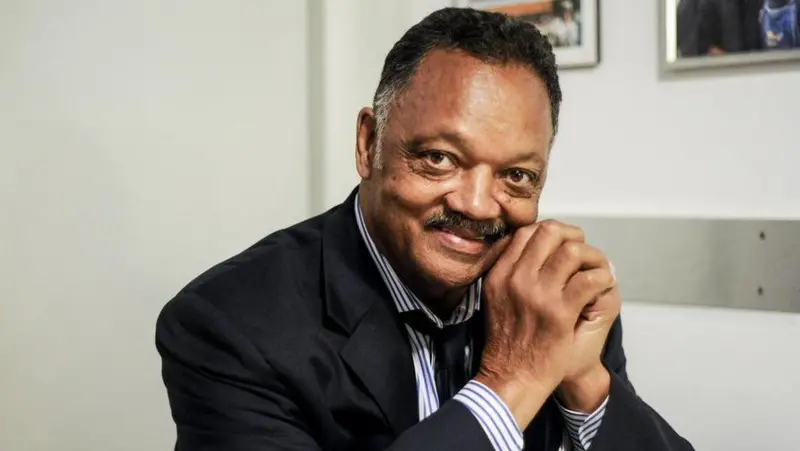
As we look back at Jesse Jackson’s life and career, it is important to not limit his work solely to the Black Freedom Movement. He is part of a long line of African Americans who consistently made the case that race, colonialism, and nuclear weapons were inextricably linked. That list includes Jack O’Dell. Like Jackson, O’Dell was a fixture in the Civil Rights Movement. And like Jackson, O’Dell’s antinuclear work has been largely ignored. O’Dell ran Dr. King’s Southern Christian Leadership Conference in Harlem and Voter Education Project in Atlanta. He regularly wrote for Freedomways, the quarterly founded by W.E.B. DuBois. O’Dell also counseled Dr. King on the connections between the Vietnam War, peace, and racial equality and later joined Jesse Jackson in helping him run Operation PUSH and the Rainbow Coalition. In a world of ever-growing instant gratification, it remains important to recognize historically how long social movements last, the commitment it takes to move the needle, the influence past leaders had on one another, and the work that we need to do to continue to build the world Jesse Jackson and so many before him envisioned. It is now on all of us to truly “Keep Hope Alive.”