‘Act for life and not death’: social movements and nuclear abolition
M.V. Ramana warns that the nuclear threat does not hold the power to mobilize people as it once did, It’s time to build intersectional and international movements.

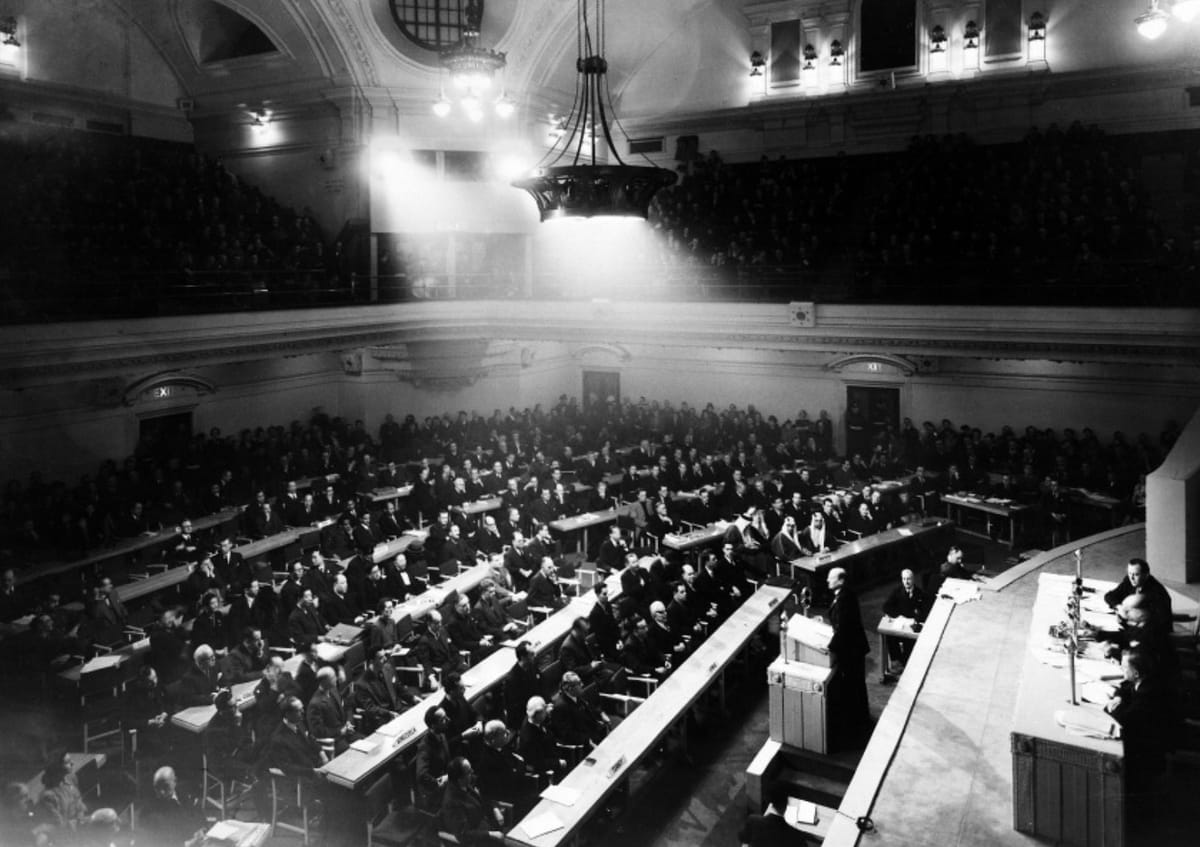
Ever since the world learnt of nuclear weapons in 1945 following the destruction of Hiroshima and Nagasaki, the necessity of abolishing them has been widely recognized, starting with the very first resolution of the United Nations. People around the world have worked to eliminate the nuclear threat since then.
The capacity for mass destruction has grown manifold since 1945 and is possessed by many more countries. Between them, nuclear weapon states possess close to 10,000 nuclear weapons and have invested in efforts to assure that these weapons remain destructive and usable. Threats to use nuclear weapons have been bandied about with regularity, including by Russian officials and Israeli officials. U.S. President Donald Trump has called for resuming nuclear weapons testing. Countries are also trying to expand nuclear energy, which would increase the capacity of countries to make nuclear weapons.
Nuclear weapons are not the only way states can kill people. These weapons, as peace activist Ray Acheson has argued, “are part of the spectrum of institutionalized violence” and operate “at the intersection of patriarchal, racist, colonial, and capitalist oppressions”. To indulge in a pun, we should not confine nuclear disarmament to its own silo.
On this spectrum of state violence are militaries and the weapons they wield. States are continuously expanding the capacity to engage in militarized violence. According to the Stockholm International Peace Research Institute, global military expenditure in 2024 reachedUS$2.7 trillion, “completing a full decade of consecutive annual rises” with “more than 100 countries” increasing their military expenditures.
Even as one might trace these increased expenditures to specific events—Russia’s invasion of Ukraine or Israel’s genocidal assault on Gaza, areexamples—there is also continuity. As the historian E. P. Thompson argued in response to the military buildup under U.S. President Reagan: “The long waves of the armourers do not move in phase with the waves of diplomatic confrontation. Each international crisis legitimates the process, and strengthens the upswing”.
In response Thompson called for a “popular alliance” that would serve as a countervailing force against the nuclear and military arms races of that time. A similar call might be issued today. No government or group of governments seeks to actively counter this growing tide of militarism, and there are no realistic arms control or disarmament proposals on the anvil. Social movements offer the only path forward to avoid disaster.
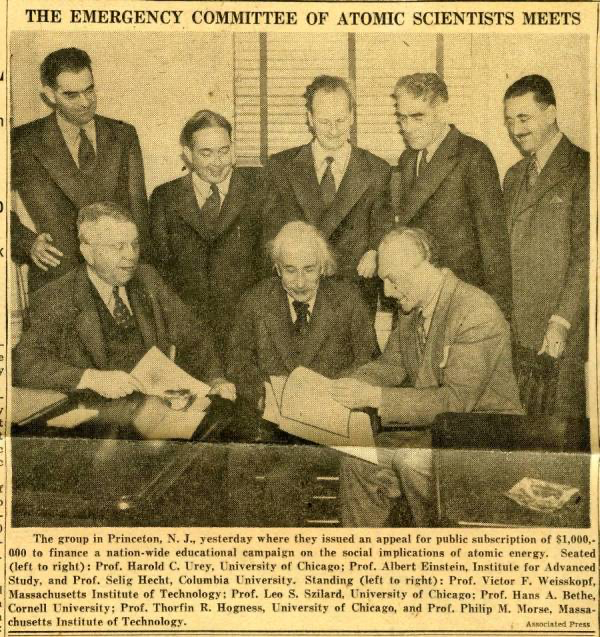
The importance of social movements has been recognized since the dawn of the nuclear age. In January 1947, writing on behalf of the recently constituted Emergency Committee of Atomic Scientists, Albert Einstein argued that there was no “possibility of control” of atomic energy “except through the aroused understanding and insistence of the peoples of the world”. An “informed citizenry will act for life and not death,” Einstein believed.
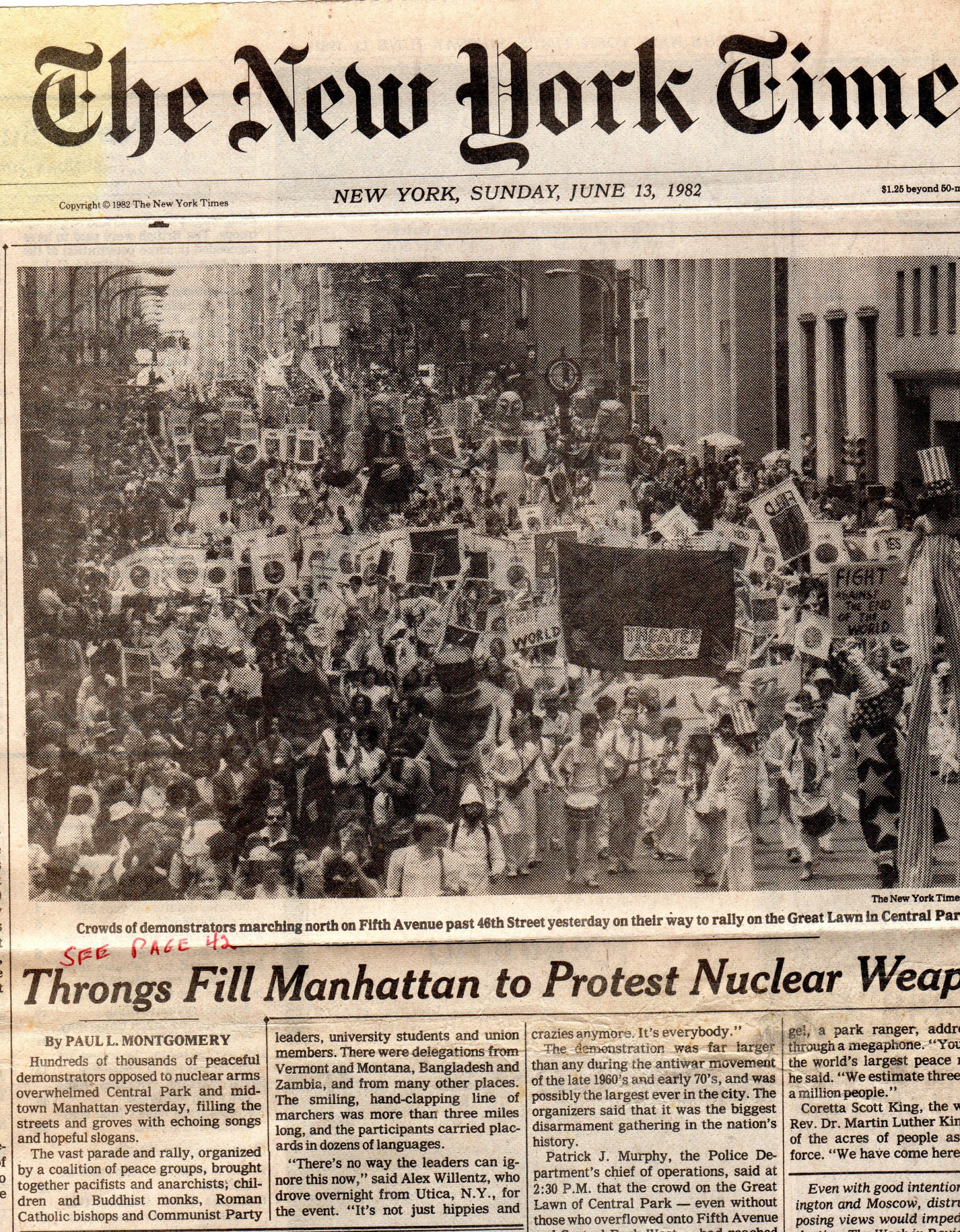
In the decades since, the peace movement didmobilize large numbers of people during various periods.The 1980s saw, for example, the huge rally for nuclear disarmament in New York on June 12, 1982 and a major protest in London on October 22, 1983. Historians like Lawrence Wittner have documented how such mobilizingdid contribute to preventing nuclear war.
But the 2020s are not like the 1980s. Even though people seeking nuclear disarmament continue to gather, the numbers at rallies are more likely to be in the dozens rather than the hundreds of thousands seen in the 1980s.
This is not because people are unwilling to march and rally: consider the large congregations seen during the 2025 No Kings protests or rallies for Black Lives Matter in 2020 or the Climate Strike events of 2019. What we might conclude is that the nuclear threat does not hold the power to mobilize people.
This challenge, in addition to the relationship of nuclear weapons to other forms of oppression mentioned earlier, requires us to think and organize in intersectional ways. As peace activist Andrew Lichterman has argued, social movements “will need to bring together work for peace and disarmament with the disparate strands of work against environmental breakdown, polarization of wealth and economic injustice, erosion of democracy, and the targeting of migrants, national minorities, and other vulnerable people. The connections between these issues will have to made at the level of their common causes in a global economy whose central dynamic for centuries has been endless material growth, driven by ruthless competition among authoritarian organizations of ever- increasing size and power”.
A final requirement for any social movement aimed at abolishing nuclear weapons is that it should be international. Nuclear weapons and their destructive capacities, as Einstein argued in 1947, “cannot be fitted into the outmoded concept of narrow nationalisms”. Relating nuclear destruction to nationalism might seem strange, but perhaps to be expected for someone like Einstein who witnessed the growth of Nazism and Fascism in Europe.
Today, again, we see the growth of blood and soil nationalisms in many countries. Nationalism and invokingthe so-called national interest allow for rationalizing massive violence. (Russian President Putin, for example,rationalized the possible use of nuclear weapons in the event that “someone decides to annihilate Russia” by saying: “Why do we need a world without Russia in it?”) In such a moment, then, the peace movement needs to necessarily grapple with, and overcome, the power of nationalism as well. The challenge is great – but the alternative is worse.